

I’m writing to you today from 30,000 feet up… I just took off from Sydney, on my way to present my research into feet and fascia to some of the best AK docs in the world in Aspen, USA.
Today’s issue of The Foot-Brain Connection will be a little different…
Rather than diving deep into a specific topic I thought I’d cover some of the most frequently asked questions I get from both patients and practitioners.
Before we get into it, a quick update…
If you’ve been following my journey over the past few months… Dad passed last night. Whilst I’m incredibly sad, I’m also grateful for the time we’ve spent together over the past 3 months… and the previous 49 years.
He was a legend and I’ll always miss him. I held his hand as he transitioned and I feel blessed to have shared that moment with him.
As chiropractors we help people live their fullest expression of life… I’ve always known that, but now I appreciate it at a whole new level. I truly couldn’t imagine a better way to live this lifetime.
So, here are my answers to some of the most common questions I get asked about Better Balance Orthotics, in no particular order. If I miss anything you’ve been wondering about, or you’ve heard from your patients, please let me know… just reply to this email.
How long do Better Balance Orthotics last?
Better Balance Orthotics are guaranteed for 12 months… if anything goes wrong in that time, we will replace them.
However, they generally last much longer.
Personally, I have some pairs that are over 10 years old. I know patients who’ve had them for even longer.
Everyone’s experience is different. It depends on your gait, your activity level and a bunch of other factors. I usually tell my patients they can typically expect 2-3 years out of them. I like to reassess them for my patients every 12 months.
The reality is, they are a soft, flexible orthotic and that makes them prone to wear. It can’t be any other way… anything too hard or rigid, the brain just accommodates and tunes it out. The very thing that makes them effective also makes them susceptible to wear over time.
Why are there holes in the bottom?
This is necessary for us to customise them to each individual patient. Every orthotic is made-to-order and hand-filled in my house. Once the orthotic is placed in a shoe and has your bodyweight on it the flaps on the bottom are self-sealing.
Do I need to remove the insole in my shoe?
No. Just place the orthotic directly on top. In very rare occasions I have found people who prefer to take the insole out but this is unnecessary for 99% of people.
Should I wear them in my sports shoes?
Yes. They can be worn in basically any sports shoe, from runners to football cleats (even high heels and most sandals.) I even wear them in my snowboarding boots… they’re locked and loaded for my trip to Aspen…

When your muscles, nerves and fascia are activated better, you perform better. I’ve had serious weightlifters tell me they add 50 pounds to their squat and deadlift when they have them in their shoes.
Golfers in particular love them… here’s what one of my elite golfer patients had to say about them…
“The confidence I have gained since wearing my Better Balance Orthotics is incredible. I am far more stable on my feet and have experienced awesome improvement in my core strength. My golf game has definitely benefited as I feel stronger when I hit the ball.”

Personally, I feel that any athlete who isn’t wearing our orthotics…
Is at a serious disadvantage.
I don’t wear shoes often… will they still help me?
Yes. One of the things I love about these orthotics is that they’re not just a mechanical crutch, that only helps when you’re standing on them (like traditional orthotics.) They are a genuine brain and body rehab device. They make lasting differences to your structure and function that persist even when you’re not wearing them.
We see this with the vestibular plate measurements we take in the clinic… your brain changes when you enhance feedback from your feet.
My own arches are a testament to this… they didn’t exist for the first 30+ years of my life. My feet were dead flat. Now they have visible, functional arches. My wife first noticed it when we were walking on the beach one day… “Hey, check out your footprint… it looks like a normal foot now!”
I explain it to patients like this…
“It’s like going to the gym… you don’t need to go all day, every day… you just go for a few hours a week and you still get the benefits. Wearing these orthotics is like that- just wear them when you wear shoes and they will help you.”
(Of course, the more you wear them, the faster those benefits will show up.)
Once my feet are “fixed” do I still need to keep wearing them?
One of the great things about these orthotics is that they make lasting structural and functional changes to the feet (and the rest of the body.)
I live in Sydney, Australia, and for half the year… it’s hot.
During that time, I live in thongs (flip flops for my American friends… but if you just imagined me in a thong… I’m sorry.)
That used to cause me significant lower back pain.
It doesn’t anymore.
My feet are more functional now.
So yes, in theory, once your feet are “fixed” you can stop wearing Better Balance Orthotics.
Except your feet aren’t actually the problem.
The problem is that you wear shoes, and walk on flat, unnatural, neurologically-boring surfaces.
And if you keep doing that, your problems are going to recur.
The unfortunate truth is… we all keep doing that. It’s basically impossible to avoid in the modern world.
My personal experience is, I generally don’t like wearing shoes without my orthotics. It just doesn’t feel right. Most of my patients are the same.
It’s like getting regularly adjusted…
Once you realise how good you can feel…
Why would you ever want to go back to feeling anything less than that?
Are they covered by my health fund?
If you live in Australia, the answer is probably yes. They are covered by most health funds. There are only a few that apparently believe only podiatrists understand feet. Please reach out if you’d like more specifics.
If you live in the USA… we’re working on it. Your insurance system is a mystery to us but some of our docs there are working with health insurance providers to hopefully get them covered. The way we see it… having a better interface with the ground we walk on is a basic health fundamental- it should be covered.
How often should I reassess my orthotics?
Personally, I like to check my patients every 12 months. Most of the time their prescription is stable. Quite often people who previously needed a bunion prescription no longer do, as their bunion has straightened completely. Sometimes they no longer need one of their arches filled- it has become fully functional.
However, 99% of the time they still strengthen to their original orthotics.
This is also a great time to check in if they want another pair… many people love their orthotics but don’t want the hassle of transferring them from shoe to shoe. Personally, I have a pair in every set of shoes I own (I don’t own that many.)
In Australia, most health funds will reimburse for a pair every year, so many patients choose to grab another pair each year. In my clinic we send out a letter to remind them of this benefit… if you’d like a copy to send to your patients just reply to this email and we’ll send it your way.
Can I wash them?
My personal experience is that if you wear socks, your orthotics will rarely require washing.
If you ever feel they do… we recommend wiping them down with a baby wipe. It’s better to not get them wet – but if you do make sure to air dry them before wearing again. Just don’t put them in the dryer… they’ll curl up like a spaghetti noodle.
How young can I fit them?
The youngest child I’ve fitted was 4 years old. Our smallest size is 8cm.
I used to hesitate fitting young children, knowing they would quickly grow out of them. However, what I’ve learned is that the benefits for young children far outweigh the costs. Why wait for a problem to continue to develop, become entrenched, and spread compensation patterns… when you could just fix it now?
In my opinion, this is one of the biggest flaws in our medica system… ”We’ll just keep an eye on it, until it’s totally screwed and you need medication or surgery.”
That’s bullshit.
Most parents are extremely grateful if you can sort a problem out now… before it ever becomes a greater problem.
When it comes to sizing children, I usually size them a little larger so they have room to grow.. typically I’ll add 0.5-1cm to their measurement.
How are they different to traditional orthotics?
Traditional orthotics are a mechanical crutch. They push your foot into a different shape… but they do nothing to alter your neurology, your muscle firing patterns or your actual function (as is easily demonstrated by the standing hip flexor test that we teach.)
Better Balance Orthotics are different. They don’t work by supporting dysfunction… they work through stimulation. They stimulate the muscles, nerves and fascia in your feet to activate better function, posture and neurology.
A traditional orthotic is like a back brace- it’s doing the work for you (and weakening you in the process.)
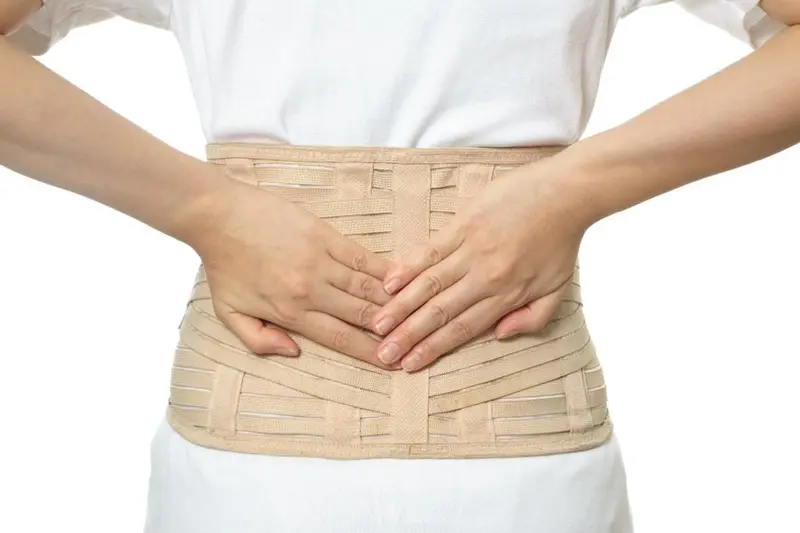
Better Balance Orthotics are actively training your body to do the work itself… and strengthening your brain, body and balance as a result.
Do I need to purchase expensive equipment to get started with my patients?
No. Unlike many other orthotic systems, no expensive equipment is required. Our starter pack includes a personal pair for you as the doc (you gotta walk your talk) and everything you need to get up and running in your office, including equipment, training and support… for less than the retail price of a single pair of orthotics. It couldn’t be easier to get started.
Who needs Better Balance Orthotics?
Everyone.
It’s that simple.
I know it sounds like a sales pitch… I’ve struggled with this answer over time.
But it’s 100% true.
If you walk on predominantly flat surfaces…
And wear shoes…
You need Better Balance Orthotics.
Period.
So there you have it… my answers to the most common questions I hear from patients and docs… at least as far as my brain can come up with right now… last night was a long night.
Tomorrow I’m going to commune with the mountain… I’m sure it’s going to be a healing experience.
I hope your week’s awesome.
Cheers,
