

“Dad, why did you just let go on purpose?”
That’s what my son Caelan asked me when I tried knee-boarding with him for the first time last weekend.
About once a year we’re lucky enough to be invited out to camp by the river with our old next-door neighbours, who own a beautiful ski boat. It’s my annual wakeboarding session (which my muscles are still reminding me about today!)
Caelan loves everything about it. At 6am, when everyone else was still asleep in their tents, he was sitting on the boat, swimmers on… ready to go and completely unable to comprehend why anyone would still be wasting time in bed.
Being only 10, his feet aren’t quite big enough to fit into any of the waterskiing or wakeboarding gear, so it’s knee-boarding and tubing all the way for him.
Like so many good things in life, he finds these activities more fun when he has someone else to share them with. So, after he’d exhausted my neighbour’s teenage boys (both of whose work you have probably experienced, as they work for us hand-filling Better Balance Orthotics) he called me out to join him.
I’ve never actually ridden a knee-board, but I figured “How hard can it be?”
The truth is, it wasn’t that hard at all. I’ve spent a fair bit of time riding various boards.
That’s why he was so puzzled when, after barely 10 minutes, I dropped the rope and called for the boat to pick me up.
To be honest, it was a struggle even keeping it up for that long.
My ankles were killing me!
Knee-boarding involves kneeling with your knees fully bent and your ankles fully plantar flexed. I’d say within a couple of minutes it became pretty uncomfortable, and by the 10th minute it was close to unbearable.
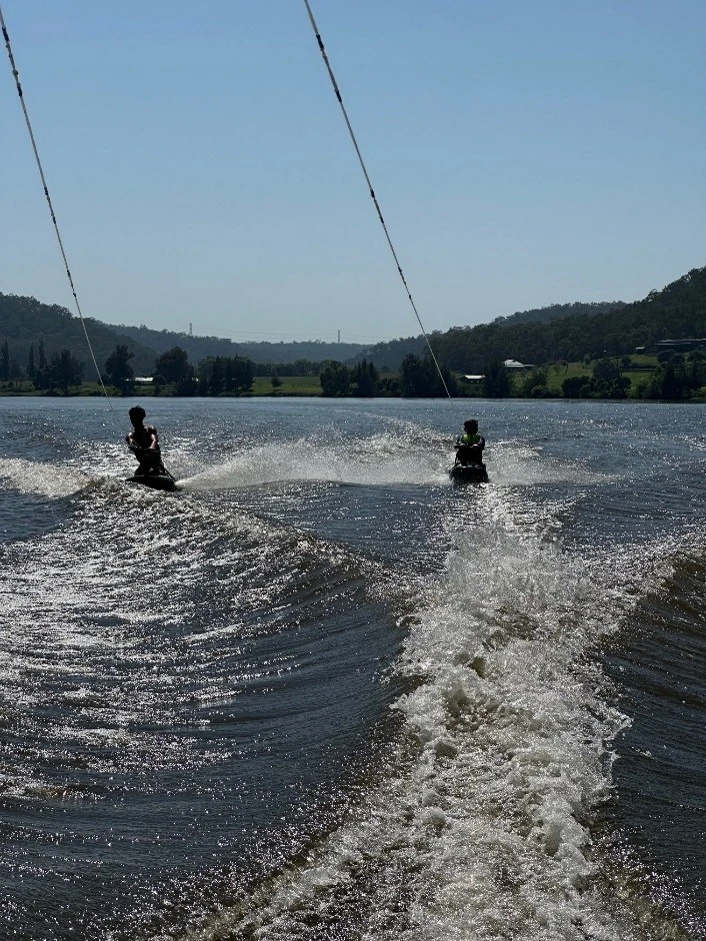
Which was why I had to swallow my pride and drop the rope.
What really surprised (and disappointed) me about this, was that I remember being in a yin yoga class years ago and effortlessly holding this pose for a prolonged time, wondering why so many of the oldies were complaining and tapping out.
Now I was one of the oldies!
Me, the chiropractor…
The Better Balance guy…
The guy who prides himself on not just keeping up with his kids, but being in the thick of it with them, whatever the activity!
That’s why this week in The Foot-Brain Connection I thought we’d explore the concept of Movement Longevity… what it is, why it matters, how we lose it…
And most importantly, what you can do to maintain and even enhance it, both for yourself and your patients.
I’ve heard it said that movement is life.
It’s one of the defining characteristics that signifies the difference between living and non-living.
We move.
One of my original adjusting tutors, Dr. Michael Fogerty, used to say that…
“Movement is life, and aging is stiffening.”
To be honest, that never fully struck home to me until my knee-boarding moment last weekend.
But damn… apparently he was right!
I chose to have my kids later in life. Jodie and I travelled the world, did all the fun things, and really built a life together before finally deciding it was time to settle down and build a family.
I don’t regret a minute of that time… but it does drive my priorities, decisions and values now. I see so many dads sitting on the sidelines, or caught up in the corporate rat-race, missing out on those valuable moments and experiences that you never get back.
I’m determined not to be one of those dads. And having just turned 49 last month, I realise that means building and maintaining a body (and mind) that can keep me performing for many years to come.
Right now, as I confront the potential end of my own father’s life, these priorities become even clearer.
(For those who’ve been asking, he’s still in the ICU, still hanging in there, the tough old bugger.)
I was a soccer player growing up, and for several years my dad was the coach of my soccer team. Even during the years he wasn’t coaching, he was always behind the goal encouraging and supporting me.
(I was always the goalie due to my flat, springless feet and my resulting lack of athletic prowess.)
I treasure those memories.
And I want that for my children.
So let’s talk about Movement Longevity.
Movement longevity is defined as… The practice of maintaining functional, pain-free mobility throughout a person’s lifespan, focusing on preserving physical capacity rather than just youth.
Much like the concept of Lifespan has now shifted more towards a more nuanced focus on Healthspan…
Movement Longevity has become recognised as a vital aspect of healthy aging.
Aging gracefully and maintaining a robust Quality of Life requires healthy movement.
And like so many other aspects of health, it’s far easier to maintain it than it is to regain it once it’s lost (although it’s never too late.)
Despite being 49, my brain still thinks I’m 20, and healthy aging isn’t something I’ve often thought about… it’s generally felt like something I can worry about later.
That’s why this weekend was such a wake-up call… the time is now!
Like many aspects of aging, loss of functional movement ability creeps up on us. I’m a pretty active guy…
Yet I had no idea that the level of plantar flexion in my ankles had stiffened to the point where I could no longer sit with my feet tucked under me for even 10 minutes.
How many other neglected ranges of motion have diminished without me even noticing?
How many of yours have done the same?
And how many patients in your practice have this going on right now?
It’s Not Just About Strength:
Podiatrist and Functional Movement Specialist, Dr. Emily Splichal, is an advocate for the concept of Movement Longevity. One key thing that her work demonstrates is that we lose quality of movement long before we start to noticeably lose strength.
Strength training has become standard health advice for older adults… and for good reason. We know that our muscle mass typically starts declining in our 30s, at a rate of about 3-8% per decade. This sarcopenia accelerates as we age, often increasing to 1-2% per year by the time we hit 60.
This is why resistance training is so important, especially in today’s sedentary, everything-delivered-at-the-click-of-a-button world. It has major implications for maintaining both our muscle mass and our bone density.
Maintaining muscle is about more than just looking sexy at the beach… muscle is now being recognised as a major metabolic organ, which has a vital role in managing our blood sugar and other hormonal factors (muscle cells are the main receptor sites for insulin.)
But strength alone is not enough.
My ankles are strong…
I maintain a (mostly) daily resistance band workout, and I can crank out a respectable number of calf raises with a seriously heavy resistance band…
Yet I still couldn’t knee-board for more than 10 minutes.
Loss of movement quality shows up in a number of ways…
· Clunky or rachet-like movement- you will often see this in patients’ shoulder and cervical movement, especially towards end range.
· Loss of confidence, balance or stability… as our small stabilisers fail, we rely move on our bigger, global movers… but without a stable base to work from this often leads to strains and injury, like the person who tweaked their back just bending to pick up a pen, or the person who “slept funny” and woke up with a torticollis or stiff neck.
· Poor special awareness- tripping, falling or bumping into things due to imprecise motor control (there are sensory aspects to this too.)
One of the most detectable ways we see loss of movement quality (although it’s often missed) is as gradually declining range of motion… not just in the obvious areas we commonly check, like cervical or lumbar flexion or rotation.
These are often the last to go.
We see it sooner in things like wrist and ankle extension, spinal extension and complex movements like combined rotation, lateral flexion and bending.
One of the most common places it shows up first is in loss of hallux extension… which then causes us to shorten our stride, alter our gait and reduce out range of hip extension. All of these compensations have significant biomechanical consequences- things you deal with every day in clinic.
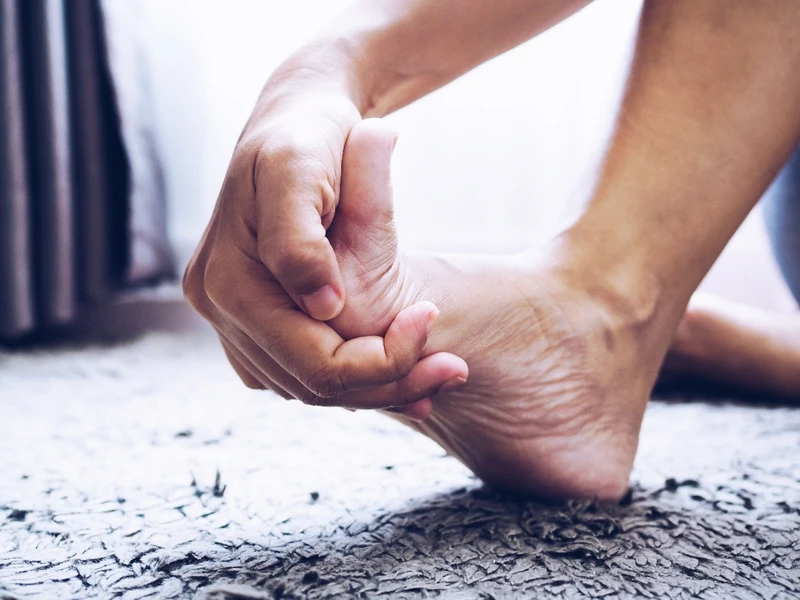
If you start checking this on every patient, I’m sure you’ll be shocked by what you find.
In the spine this shows up as loss of intersegmental mobility long before global ranges of motion become noticeably reduced.
How many times have you palpated someone’s spine and found painful, restricted segments that the patient didn’t even realise were tender… until you touched them?
This doesn’t just apply to obvious subluxations… it often happens on a gradual, widespread level, even when things still appear reasonably functional.
If you gently but firmly dig into the intertransversarii muscles in the cervical spine, the intersegmental muscles throughout the thoracic spine, or the multifidi in the lumbar spine, I absolutely 100% guarantee you will find many exquisitely tender muscle origins and insertions, even in asymptomatic patients.
You can check this out for yourself right now. First, assess your cervical range of motion- just rotate your head to each side and note how far you get.
Now, firmly palpate along the transverse processes of your cervical spine. How many of them are tender?
The sore spots you feel aren’t the bones… they are injured and dysfunctional muscle attachments.
For each tender spot, firmly press the muscle attachment onto the bone. I’m not talking about a gentle massage… press firmly. Usually, it’s quite painful.
In Applied Kinesiology this is known as Origin/Insertion Technique.
It’s one of the simplest, yet most powerful tools in my clinical arsenal. I use it every single day.
You’d be amazed how many dodgy lower backs I’ve stabilised by thoroughly applying this to the multifidi. Segments that previously required repeated adjusting now hold their corrections beautifully. And movement quality improves dramatically throughout all lumbar ranges of motion.
Suddenly patients no longer have that… “It could go at any minute if I just move the wrong way” feeling.
Once you’ve finished working your way down either side of your cervical spine, let’s recheck your range of motion.
Again, turn your head to either side and note how far you get.
Did you get further?
And did it feel smoother?
I bet every single patient in your clinic could benefit from this simple technique. It’s so simple, it’s boring.
But sometimes boring works best.
I coach my associates all the time that fancy techniques are no substitute for consistently doing the basics.
As Bruce Lee famously said…
“I fear not the man who has practiced 10,000 kicks once, but I fear the man who has practiced one kick 10,000 times.”
(I know I referenced Bruce Lee last week too… It’s not that I’m a huge Bruce Lee guy, but when you’re right, you’re right 😉)
Ninja-level tip…
If you combine this technique with Injury Recall Technique throughout the spine you will see even more profound results. I often work through this simple procedure over my first few visits… because it can be quite painful, I find it best to spread it out over a few visits rather than blow out my patients’ adrenals by trying to get it done all at once.
(If you’re not an AK doc and you’re not familiar with IRT, reach out to me and I’ll point you in the right direction.)
Patients are often amazed by the significant and immediate increase in range of motion that this produces. In many cases you will see a 10-30% improvement in cervical range of motion, in under 2 minutes… even if it’s been restricted for years!
Not only that… if you apply this you will be laying a rock-solid foundation for your patients to maintain their Movement Longevity for many years to come.
So where do these issues come from? And why does everyone seem to have them?
Why we lose our Movement Longevity:
The reality is, life is stressful- physically, chemically and emotionally.
Who never fell off their bike when they were a kid?
Or stacked it as a toddler when they were learning to walk?
Or braked suddenly in their car?
Or even got twisted up in the birth canal?
You get the picture.
Life is full of these micro (and macro) traumas that compound over a lifetime and significantly affect our movement longevity.
I had one of my own over the weekend…
While I was wakeboarding I launched off the wake…
And managed to land the biggest faceplant of my life!
I know it was just water… but it felt like concrete when my face ploughed into it.
By the time I got back onto the boat I had a raging headache, blurred vision, and I couldn’t believe the fluid flowing freely out of my nose was just river water, not blood.
My cervical range of motion was definitely, immediately reduced… but within about 10 minutes of applying the technique I just described, I was more-or-less back to normal.
Which was cool…
But how many of your patients don’t have access to these techniques on a day-to-day basis?
So the stresses of life just pile up and compound over time…
Leading to serious, long-term, cumulative effects.
Unless, of course, you step in.
(By the way, my weekend was awesome… I’m sharing some of the hard lessons, but it wasn’t all pain and misery, it was actually tonnes of fun.)
Loss of movement longevity shows up in other ways too.
It’s not just about range of motion.
When it came to my knee-boarding experience, range of motion wasn’t the issue. I could easily kneel on my plantar flexed ankles. The problem was, I couldn’t maintain that position (at least, not for more than 10 minutes.)
Is that a big deal?
Ask my 10-year-old son, who could easily maintain that for an hour (and literally couldn’t understand why his old man couldn’t do the same.)
Of course, he is a gymnast… and he’s 10
I’ve been thinking deeply on this.
What was the actual issue?
I believe it comes back to our discussion of Tensegrity in last week’s Issue: (name and link)
If you read that Issue you understand that in a tensegrity-based structure the flexibility of the system comes not from the local elements (like the collagen, muscles and fascia in my ankles) but from the emergent properties of the system as a whole.
If there is slack in the system, even at distant, seemingly-unrelated points, the flexibility of the whole is reduced.
This means that if I want to improve the flexibility and function in my ankles…
I can’t just work on my ankles.
I have to address my whole body.
This is one of the reasons why chiropractic adjusting is so powerful. When you adjust a subluxation, you are not just freeing up that one segment…
Or even just affecting the nervous system (which is massive in and of itself.)
If we understand tensegrity and the interconnected role of fascia throughout the body…
You are actually affecting the entire system.
The same thing is true when you wear Better Balance Orthotics.
(Now don’t get me wrong… I’m not suggesting something in your shoe could ever replace your adjustments… but why not have both? Each one compounds and reinforces the benefits of the other.)
Better Balance Orthotics stimulate the muscles, nerves and fascia in the feet, which translates through the nervous system and the fascial system to Better Posture, Balance and Muscle Activation throughout the entire body.
This effect occurs immediately (as evidenced by muscle tests, neurological tests, range of motion and palpation findings…)
And it also increases over time (as shown through long term postural changes, improvement in spinal curves, straightening of bunions, foot arch development, vestibular mapping and a whole range of other outcome measures.)
I’ve had many older patients (and some younger ones too) tell me how much more stable and secure they feel after wearing them. I even had one patient throw away her walking stick… she just didn’t feel she needed it anymore.
These strategies (regular adjustments and wearing Better Balance Orthotics) combined have a dramatic and lasting effect on your patients’ movement longevity, and therefore their quality and possibly even quantity of life (I don’t have research to back up the quantity claim, but I strongly suspect it’s true… remember, movement is life.)
Of course, there’s always more to the story.
My own knee-boarding experience demonstrates that.
Despite getting adjusted and wearing my orthotics, I’ve still got work to do. But compared to someone who’s not doing those things, I’m miles ahead.
Over the next few months, I’ll be working on improving my ankle range of motion, as well as the movement quality in my other joints. After all, I plan to keep up with my boys for many years to come!
One huge area that I haven’t touched on in this Issue (but I will in future) is the impact of mindful movement, the qualities of interoception vs exteroception and how sensation is the key to improving movement. Keep an eye on your inbox.
I’ll keep you posted on my progress, as well as any insights I think may be valuable for you or your patients along the way.
In the meantime… what’s one thing you could do to enhance your movement longevity this week?
Cheers,

PS. If you’re finding value in these newsletters, please forward this Issue on to a colleague or friend who you know would benefit… I’d really appreciate it. I’m deeply passionate about getting this message out to our profession and the world. Thank you 🙏